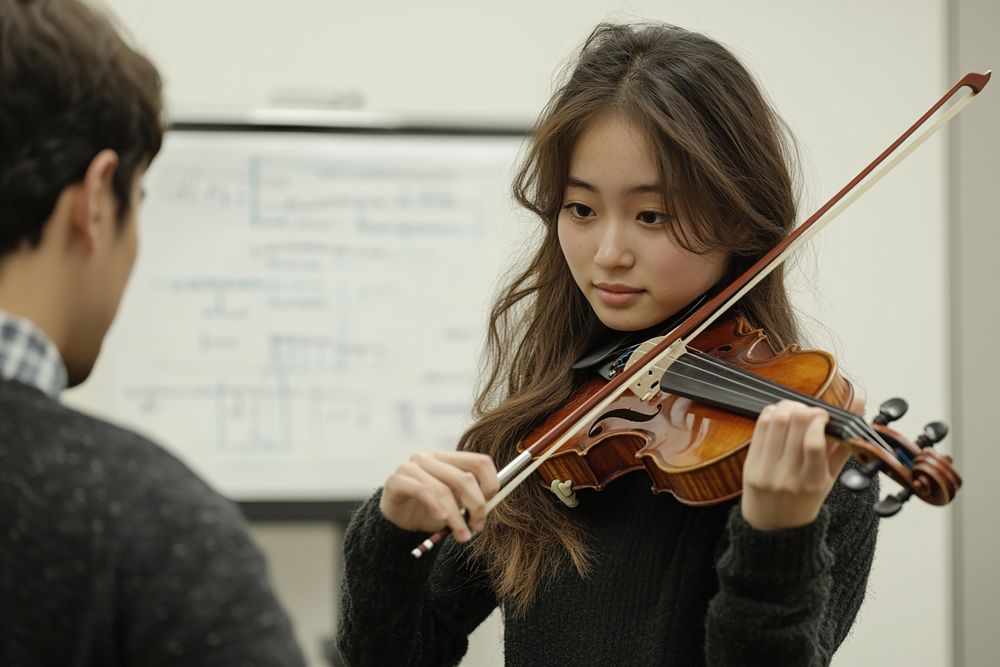
Violin lessons in Singapore occupy a fascinating position within one of Asia’s most ambitious music education ecosystems, drawing on pedagogical traditions developed across centuries in Europe while adapting them to the needs and aspirations of a modern city-state where academic rigour and cultural investment sit side by side. To understand why the violin has maintained such enduring appeal here, one must consider both the instrument itself and the environment in which it is learned.
Why the Violin Rewards Systematic Study
The violin is, by any comparative measure, one of the most technically demanding instruments a student can choose. Unlike the piano, which produces a reliable tone the moment a key is depressed, the violin requires the player to create the tone entirely through the coordinated action of two hands working in precise relationship with one another. There is no fret to guide the left hand, no fixed mechanism to guarantee pitch. Every note is, in a very real sense, constructed from nothing.
This is not a reason to be discouraged. It is a reason to understand why structured instruction matters so profoundly. Self-directed learning on the violin produces, with rare exceptions, ingrained technical errors that become progressively harder to correct. The data from music educators is consistent on this point.
A violin teacher with extensive experience in Singapore string education observed:
“Students who begin with a qualified teacher and learn correct posture and bow hold from the very first lesson almost always progress faster and further than those who try to teach themselves, even partially. The early habits are everything.”
The curriculum used in Singapore’s better violin programmes reflects this understanding deeply.
The Structure of a Well-Designed Violin Curriculum
What distinguishes an effective violin learning programme in Singapore from a less rigorous alternative is not the speed at which repertoire is introduced, but the systematic way in which foundational skills are built before more complex demands are placed upon them. The progression follows a logic that mirrors the development of other complex human skills.
In the early stages, a well-structured curriculum addresses:
- Correct instrument hold and shoulder rest positioning to prevent long-term physical strain
- Bow grip and the mechanics of producing a clean, sustained tone across all four strings
- Left-hand frame and basic intonation, including first position scales in major and minor keys
- Simple melodic pieces that reinforce technique without overwhelming the student’s coordination
- Ear training exercises that develop the student’s ability to hear and correct their own pitch
This foundation is not merely preparatory. It is the architecture upon which every subsequent skill depends. Compromise it, and the entire structure becomes unstable.
Intermediate Development: Where Complexity Begins
The intermediate stage of violin tuition in Singapore is where the instrument begins to reveal its remarkable expressive range, and where many students experience their most significant leap in both ability and enthusiasm. The technical demands increase, but so does the reward.
At the intermediate level, students typically work on:
- Shifting between positions on the fingerboard, extending the accessible range of the instrument
- Vibrato technique, which introduces warmth and expressiveness to sustained notes
- Bow distribution and the full range of articulations, including sautille, detache, and legato
- Scales across two and three octaves, developing both technical fluency and theoretical understanding
- Examination repertoire for ABRSM or Trinity College London grades, where applicable
The examination pathway deserves particular mention. Singapore’s music education culture places genuine value on graded certification, and for good reason. The structured progression these examinations provide offers students a clear ladder of achievement, with each rung demanding demonstrably higher levels of skill and musical understanding.
Advanced Study: Developing a Musical Voice
For students who progress to advanced violin performance study in Singapore, the curriculum shifts in character as well as in difficulty. The focus moves from technical acquisition towards artistic development. The question ceases to be whether a student can play the notes and becomes whether they can make those notes mean something.
Advanced study typically encompasses:
- Concerto and sonata repertoire from the core classical and romantic canon
- Advanced bow technique including complex rhythmic patterns and multiple string crossings
- Music theory and analysis as applied directly to the repertoire being studied
- Performance preparation, including stage presence, memory work, and managing performance anxiety
- Consideration of stylistic authenticity across different historical periods and compositional traditions
Teachers working at this level in Singapore bring considerable expertise to these questions, many of them trained at leading conservatories in the United Kingdom, Europe, and Asia.
Choosing the Right Programme for Your Child
Parents considering violin classes in Singapore for their children face a genuine array of choices, and the decision merits careful thought. A few key considerations consistently distinguish more effective programmes from less effective ones:
- Whether the teacher has formal training in violin pedagogy as well as performance
- Whether the early lessons prioritise correct posture and technique over premature repertoire
- Whether the pace of progression is adjusted to the individual student rather than a fixed syllabus calendar
- Whether performance opportunities, however informal, are built into the learning experience
- Whether the teacher can explain why each exercise or piece has been chosen and what skill it develops
That last point is perhaps the most telling of all. A teacher who cannot articulate the purpose of their curriculum is unlikely to have designed it with sufficient rigour.
A Final Word
The violin is an instrument that has crossed continents and centuries, evolving through the hands of craftsmen in Cremona, the concert halls of Vienna, and now the studios of a city that has made musical education a point of genuine civic pride. The curriculum surrounding it in Singapore’s better teaching environments is the product of that long, accumulated wisdom. For any student ready to begin that journey, there has never been a more rewarding moment to discover what violin lessons singapore can offer.